
Unfinished Basement Ideas on a Budget: 2026 Transform Your Space Without Breaking the Bank
An unfinished basement is one of the most overlooked spaces in a home. It’s often just storage, a laundry spot, or somewhere nobody wants to spend time.
But it doesn’t have to stay that way. With the right unfinished basement ideas on a budget, that same space can become a home gym, a cozy hangout, or extra storage that actually looks intentional.
You don’t need a full renovation to make it happen. Most of the ideas in this guide cost far less than a contractor-led remodel, and many can be done over a single weekend.
It helps to remember that “unfinished” and “unusable” aren’t the same thing. A basement with bare concrete floors and exposed framing can still become one of the most functional rooms in the house, provided the transformation is approached in the right order.
This article walks through budget-friendly unfinished basement ideas for flooring, walls, lighting, storage, and full room layouts. Every suggestion here is realistic, affordable, and doesn’t require ripping out drywall or hiring a crew.
Why Basements Get Left Unfinished for So Long
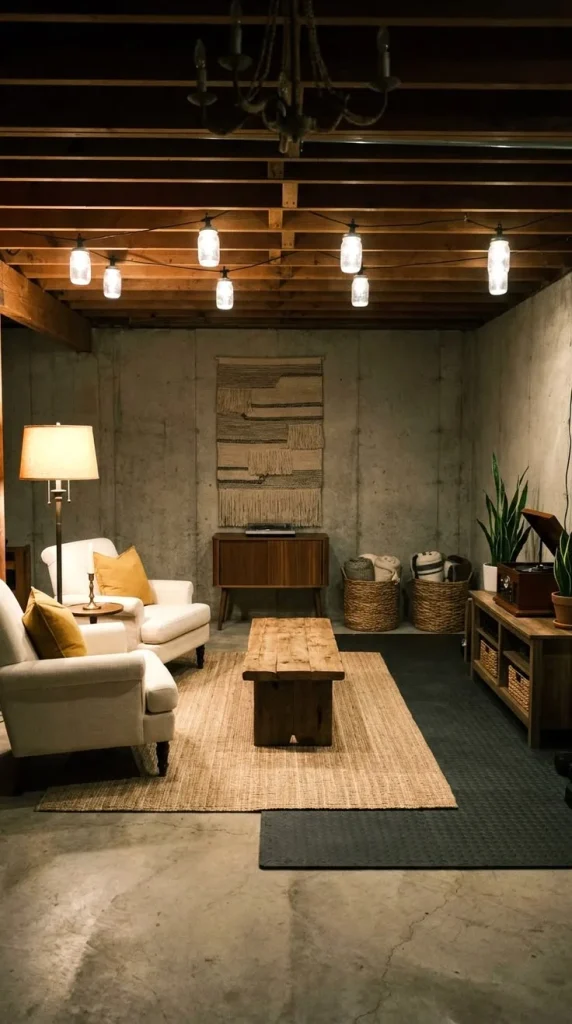
Basement Ideas on a Budget often get skipped for a simple reason: finishing one feels expensive and complicated. Concrete floors, exposed pipes, and low ceilings can make the space feel unfinishable rather than just unfinished.
That assumption keeps a lot of usable square footage sitting empty. Meanwhile, the rest of the house gets crowded with things that could easily live downstairs instead.
The truth is, most unfinished basement ideas on a budget don’t require touching the structure at all. Paint, lighting, rugs, and smart furniture placement can transform the feel of a space without a single wall coming down.
Once you stop thinking of the Basement Ideas on a Budget as “unfinished” and start thinking of it as “undecorated,” the possibilities open up fast.
Start With a Plan Before You Buy Anything
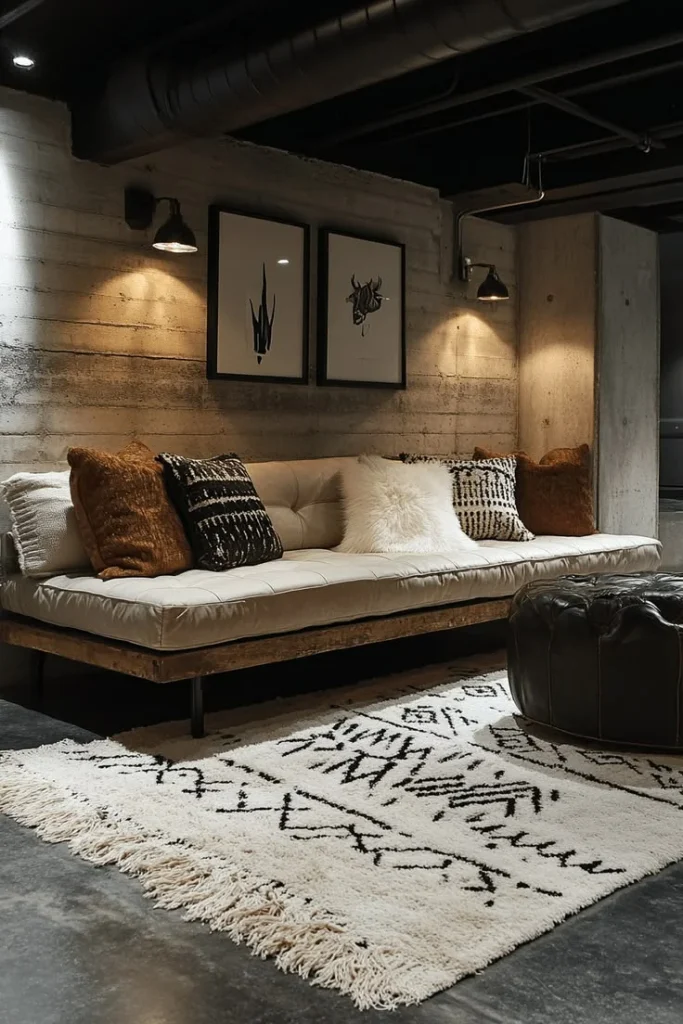
Before spending a single dollar, decide what the space is actually for. A vague goal like “make it nicer” tends to lead to wasted money on things that don’t fit together.
Walk through the basement and note what’s already working. A dry, level floor. Decent ceiling height. An outlet near where you’d want a lamp or a TV.
Then decide on one primary purpose for the space. A home gym, a media room, a playroom, a guest area, or simply organized storage all call for very different budget priorities.
Sketch a rough layout, even if it’s just a basic drawing on paper. Knowing where furniture, storage, and lighting need to go prevents impulse purchases that don’t actually solve the space’s problems.
This upfront planning step is what separates unfinished basement ideas on a budget that actually work from ones that end up half-finished and cluttered six months later.
Budget-Friendly Flooring Solutions
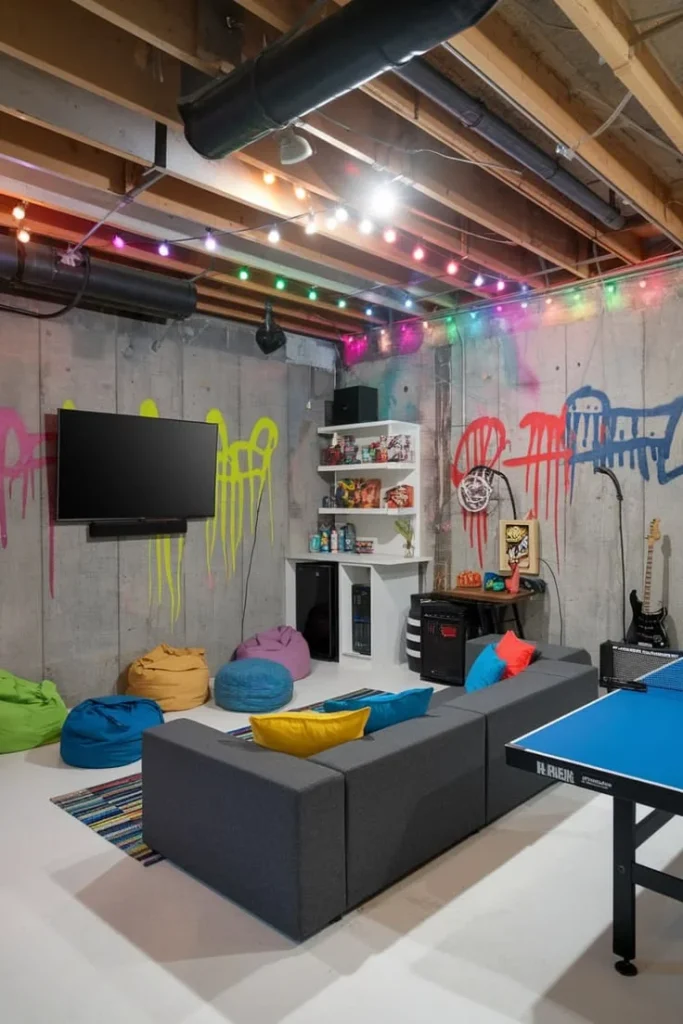
Bare concrete is one of the biggest reasons a Basement Ideas on a Budget feels cold and unfinished. Fortunately, it’s also one of the easiest problems to solve without a major renovation.
Interlocking foam tiles are one of the cheapest flooring options available, and they install without adhesive or tools. They’re especially useful in a home gym or playroom, where cushioning matters as much as appearance.
Peel-and-stick vinyl tiles mimic wood or stone at a fraction of the cost, and they go directly over concrete as long as the surface is clean and level. This is one of the fastest ways to visually upgrade a basement floor in a weekend.
Large area rugs are the simplest fix of all. Layering one or two oversized rugs over bare concrete instantly warms up a room, muffles sound, and hides an unfinished floor without any installation at all.
Painted concrete is another low-cost option. A concrete floor paint or epoxy kit costs relatively little and can completely change the tone of a space, especially in lighter or warmer colors that reflect more light.
Whichever option you choose, flooring tends to make the single biggest visual difference among all unfinished basement ideas on a budget, simply because it covers so much surface area.
Dealing With Walls Without Drywall
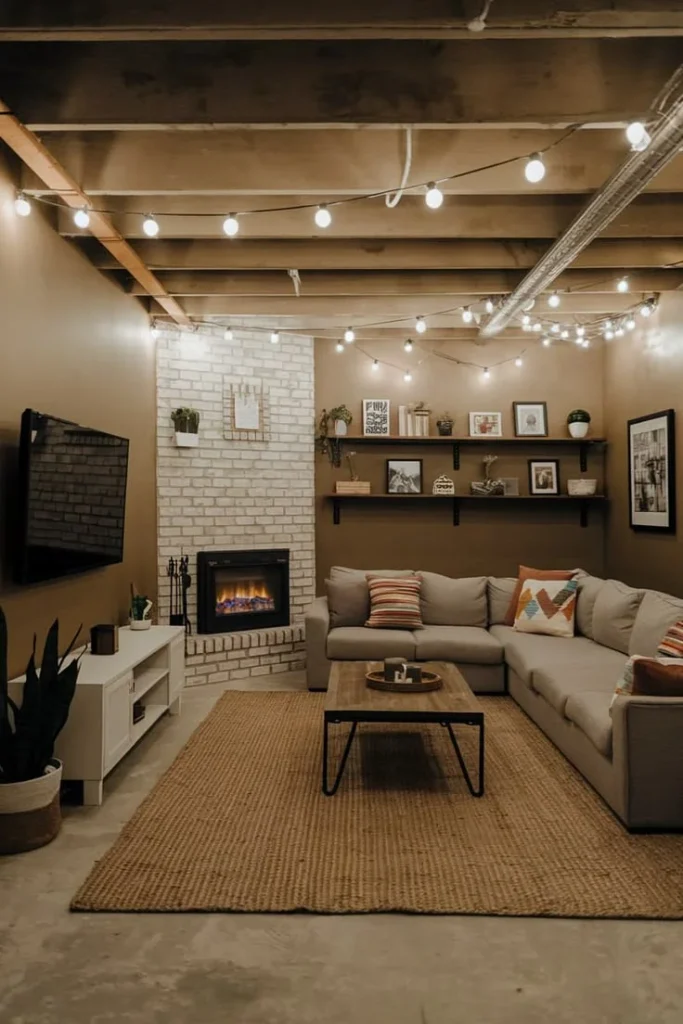
Full drywall installation is expensive, and it’s usually the first thing people assume they need before a Basement Ideas on a Budget can look finished. In most cases, it’s not actually necessary.
A fresh coat of paint directly on concrete or cinder block walls does more than people expect. Light, warm colors bounce available light around the room and immediately make the space feel less like storage and more like a room.
Fabric or canvas panels stretched over simple wood frames can be leaned or mounted against exposed block walls, softening the look without any construction work involved.
Peel-and-stick wallpaper works on primed concrete just as well as it does on drywall upstairs, and it’s one of the fastest ways to add pattern and warmth to an otherwise plain wall.
Curtains hung from ceiling-mounted tracks can section off a utility area, like a furnace or water heater, without the cost of framing in a permanent wall.
These wall treatments are some of the most transformative unfinished basement ideas on a budget, because they tackle the least inviting part of the space without touching plumbing, electrical, or structural elements.
Lighting Ideas That Make the Biggest Difference
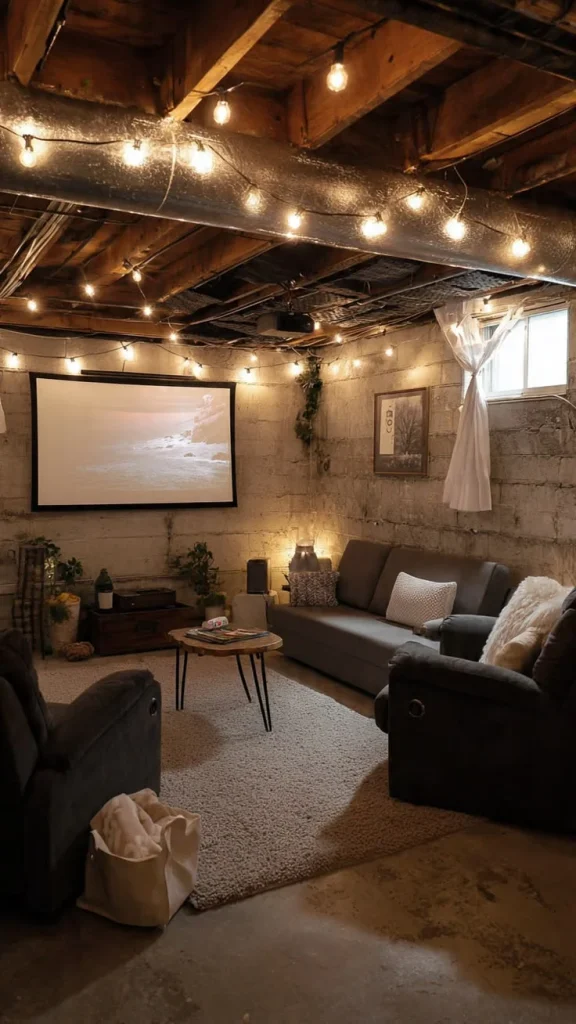
Basement Ideas on a Budget are almost always underlit, and poor lighting is often what makes a space feel unfinished more than anything else. Improving it doesn’t have to mean rewiring the whole room.
Plug-in wall sconces with a cord clipped along the wall or ceiling line offer real, layered lighting without an electrician. Many now come in styles that look fully hardwired once installed.
String lights or LED strip lighting add a warm, ambient glow along exposed beams or shelving, and they run on a simple plug or battery pack.
Floor lamps and table lamps placed strategically throughout the room break up harsh overhead lighting and create the kind of layered glow that makes a Basement Ideas on a Budget feel like a real living space rather than a storage area.
Battery-operated puck lights tucked under shelving or inside dark corners solve the “one bulb in the middle of the room” problem that makes most unfinished Basement Ideas on a Budget feel gloomy.
Good lighting might be the most underrated of all unfinished basement ideas on a budget, since it changes the entire mood of the room for the cost of a few lamps and light strings.
Smart Furniture and Layout Choices
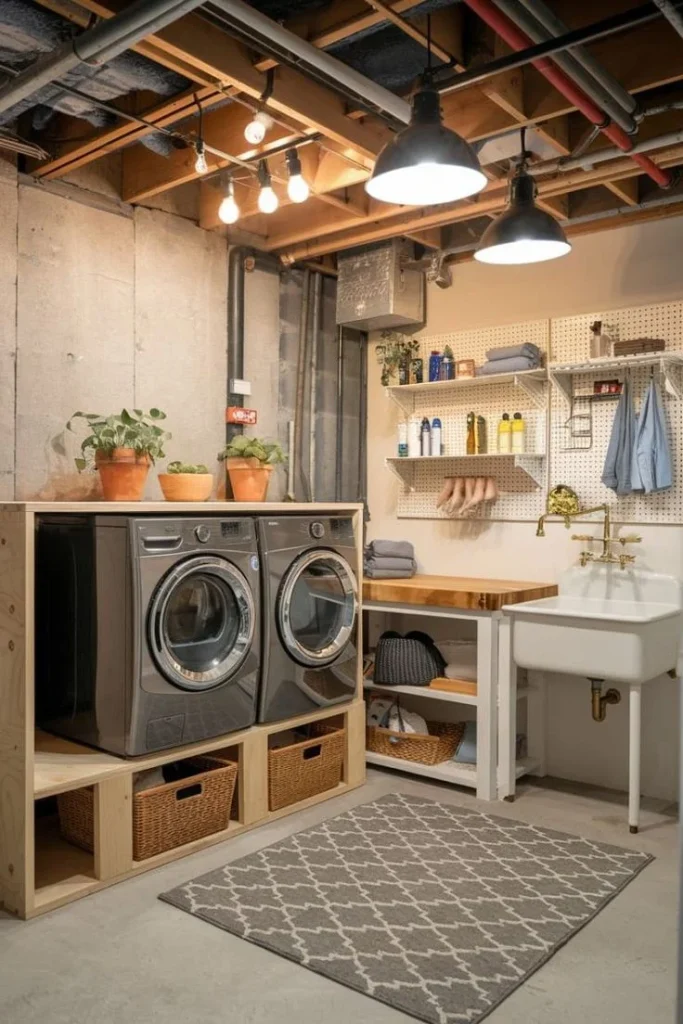
Furniture in a Basement Ideas on a Budget needs to do a little more work than furniture upstairs, mostly because basements often deal with variable temperature and occasional moisture.
Choosing pieces already suited to a lower level from the start saves money in the long run. Secondhand furniture, thrifted pieces, or budget-friendly new items are usually a smarter choice here than anything expensive or delicate.
Sectional layouts work particularly well in Basement Ideas on a Budget, since they define a cozy seating zone within a large, open room without requiring any walls at all. If you’re furnishing on a tighter budget overall, general budget decor ideas has additional direction on stretching a limited budget across an entire room.
For Basement Ideas on a Budget with an awkward or oddly shaped layout, it helps to study how furniture placement can maximize a tricky floor plan. Small living room layout covers placement strategies that translate well to Basement Ideas on a Budget with support columns, low ceilings, or unusual proportions.
Storage That Doesn’t Look Like Storage
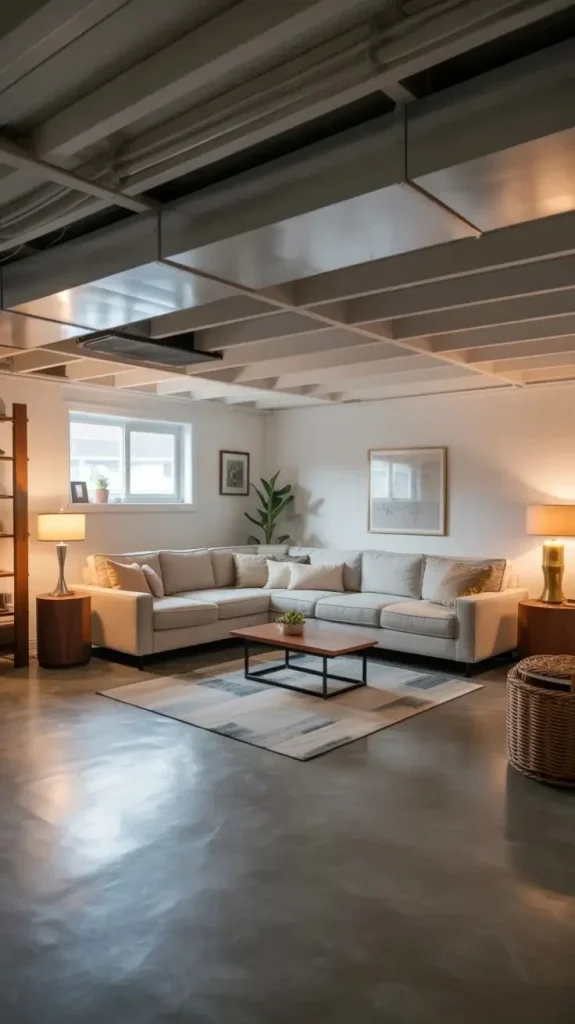
Since Basement Ideas on a Budget are so often used for storage anyway, one of the smartest unfinished basement ideas on a budget is to make that storage look intentional rather than chaotic.
Matching bins and labeled baskets on open shelving units instantly look more organized than a pile of mismatched boxes, even if the shelving itself is inexpensive.
Repurposed furniture, like an old dresser or a bookshelf, can hold far more than plastic totes while actually contributing to the room’s overall look.
A designated “everything else” zone, kept visually separate from the finished living area with a curtain or a folding screen, lets the rest of the room feel complete even if full organization is still a work in progress.
If pantry-style organizing systems appeal to you, some of the same principles used in pantry organization ideas apply just as well to a Basement Ideas on a Budget storage zone, particularly around labeling and container consistency.
Budget Ideas for a Basement Home Gym
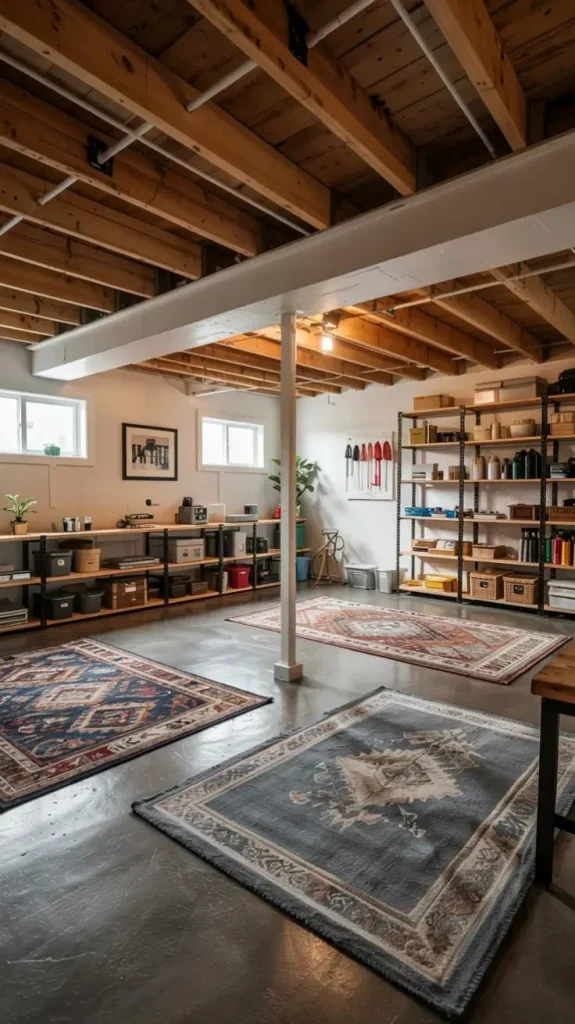
Turning an unfinished Basement Ideas on a Budget into a home gym is one of the most popular reasons people tackle this kind of project, and it’s also one of the more affordable transformations on this list.
Foam floor tiles protect both the concrete underneath and your joints during workouts, and they cost far less than dedicated gym flooring. A single wall mirror, rather than a full mirrored wall, gives you form-check capability without a major expense.
Wall-mounted or freestanding storage for weights and equipment keeps the space usable rather than cluttered, and a simple speaker or phone mount rounds out the setup without any real investment.
Budget Ideas for a Basement Media Room or Hangout Space
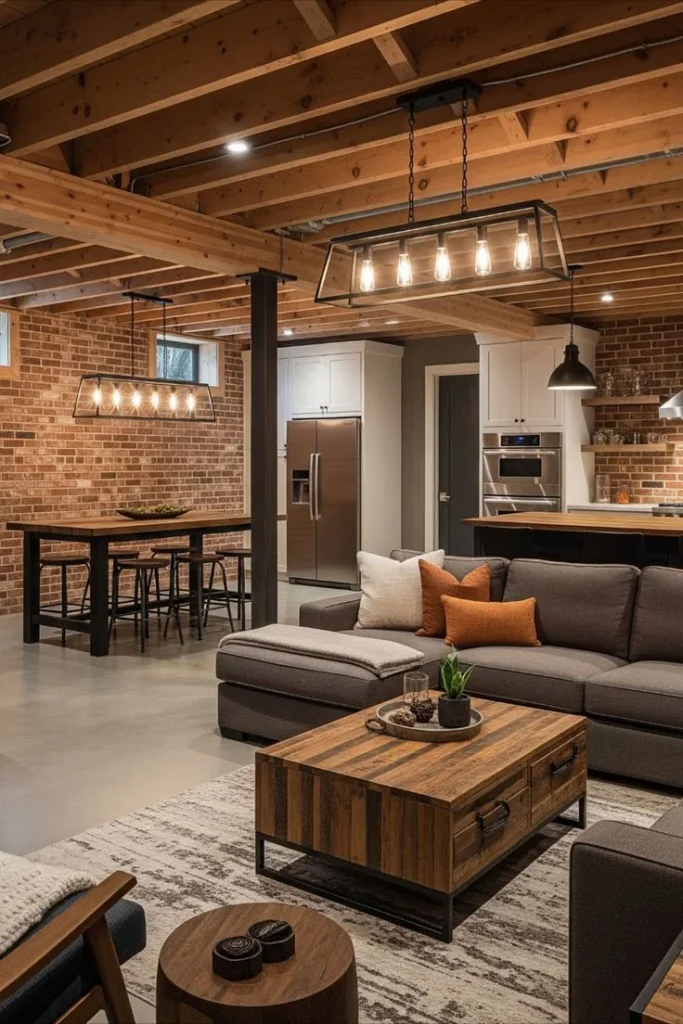
A media room is another common goal among unfinished basement ideas on a budget, since basements are naturally darker and better suited to screen time than most upstairs rooms.
A secondhand sectional or a few oversized floor cushions create comfortable seating without a large furniture budget. Blackout curtains over any small basement windows improve screen visibility during the day at minimal cost.
String lights or a simple lamp with a dimmer switch add ambiance without competing with screen glare, and a large area rug ties the whole seating zone together, even over bare concrete.
Budget Ideas for a Basement Playroom
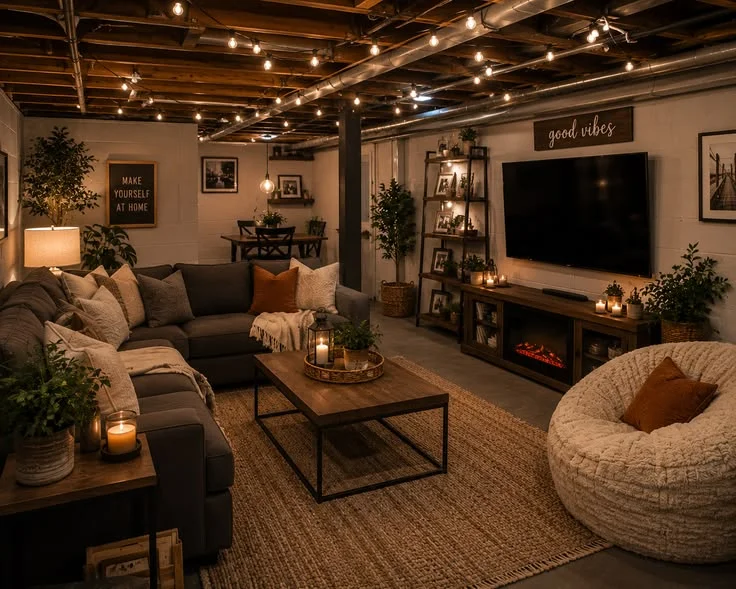
Basement Ideas on a Budget make excellent playrooms, since noise and mess stay contained away from the main living areas of the house. A few affordable choices make this transformation easy.
Foam tiles again do double duty here, providing a soft, safe surface for kids to play on. Wall-mounted shelving keeps toys accessible but organized, while soft, secondhand seating gives kids their own low-to-the-ground furniture scaled to their size.
If you’re drawing inspiration for a playful color scheme, browsing rainbow playroom ideas can help you settle on a palette before committing to paint or decor.
Creating a Cozy Guest Space in the Basement
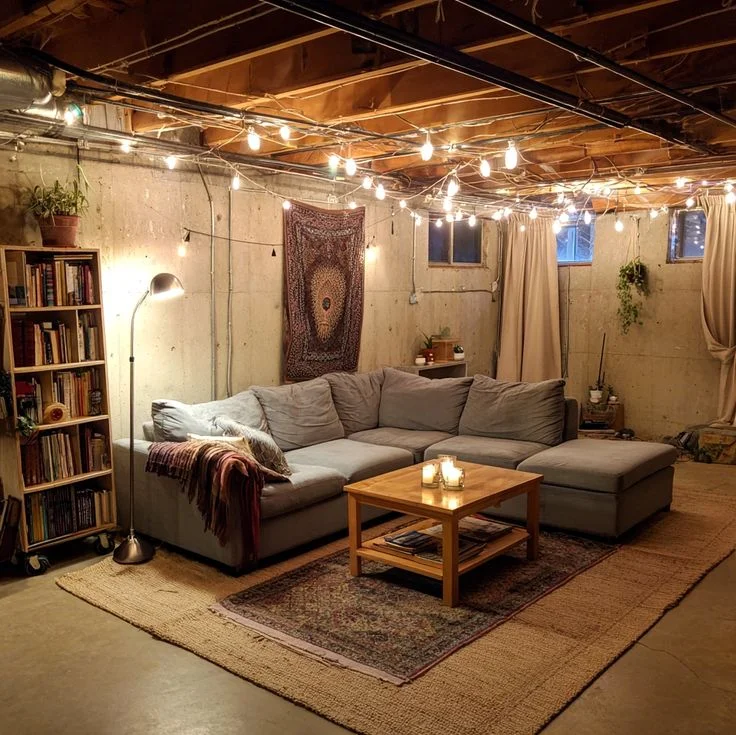
Basements also work well as an occasional guest room, especially in homes without a dedicated spare bedroom. This is one of the more flexible unfinished basement ideas on a budget, since it doesn’t require permanent furniture commitments.
A daybed or a quality pull-out sofa serves double duty as everyday seating and overnight sleeping space. A simple curtain or folding screen can create a private sleeping nook within a larger open room, without the cost of framing a new wall.
Soft lighting, a small rug, and a few personal touches go a long way toward making a temporary guest space feel considered rather than like an afterthought. If you want the finished look to feel genuinely cohesive, cozy small bedroom ideas offers layout and styling direction that scales down nicely for a Basement Ideas on a Budget guest nook.
Budget Ideas for a Basement Home Office
A Basement Ideas on a Budget home office is one of the more practical unfinished basement ideas on a budget, especially for anyone who needs a quiet space separate from the main living areas of the house.
A simple desk, a comfortable secondhand chair, and a task lamp cover the essentials without a large investment. Because basements tend to be quieter than upstairs rooms, they often make better work-from-home spaces than a converted corner of a bedroom or living room.
Good lighting matters even more here than in other basement zones, since poor lighting during video calls or long work sessions gets noticed quickly. A combination of a desk lamp and at least one additional light source keeps the space bright enough for focused work without feeling clinical.
If you’re drawn to a compact, functional layout for this kind of workspace, cute desk setup ideas offers styling direction that works just as well in a basement corner as it does upstairs.
Working Around Low Ceilings and Support Columns
Many unfinished basements come with structural quirks that upstairs rooms don’t have, particularly low ceilings and unavoidable support columns. Rather than fighting these features, the most successful unfinished basement ideas on a budget tend to work with them.
A support column can become a functional element rather than an obstacle. Wrapping it in reclaimed wood, painting it a bold accent color, or using it as a natural divider between two zones all turn a structural necessity into a design choice.
Low ceilings respond well to lighter paint colors and minimal overhead clutter. Avoiding bulky pendant lights or heavy ceiling treatments keeps the room feeling as tall as possible, even when the actual ceiling height is limited.
Furniture with visible legs, rather than furniture that sits flush to the floor, also helps a low-ceilinged Basement Ideas on a Budget feel more open, since it allows a little visual space to show underneath each piece.
Choosing a Color Palette That Works With Limited Light
Basements typically get far less natural light than the rest of the house, which makes color choice more important here than almost anywhere else in the home.
Warm whites, soft creams, and light greiges tend to reflect available light better than stark white or cool gray tones, which can feel flat and sterile in a dim room. Warmer accent colors, layered in through textiles and decor, add personality without darkening the space.
For a broader look at how to choose and combine colors across a room, room color schemes ideas breaks down palettes that read as intentional even in lower-light spaces like a basement.
DIY Projects Worth the Effort
A handful of do-it-yourself projects consistently deliver the best return among unfinished basement ideas on a budget, since they require mostly time and a modest amount in materials.
Painting exposed ceiling joists and pipes a single dark, matte color makes them visually disappear rather than standing out as an unfinished element. This is one of the highest-impact, lowest-cost basement upgrades available.
Building simple open shelving from basic lumber costs a fraction of pre-made furniture and can be sized exactly to your space. A weekend spent caulking, sealing, and addressing any minor moisture issues also protects your investment in every other upgrade on this list.
If you enjoy hands-on projects generally, DIY decor has a range of additional ideas that pair well with a Basement Ideas on a Budget blank-canvas potential.
Designing for Flexibility Rather Than One Fixed Purpose
Not every Basement Ideas on a Budget needs a single, permanent identity. Some of the most successful unfinished basement ideas on a budget are designed with flexibility in mind from the start, allowing the room to shift purpose as needs change.
Modular furniture is particularly useful here. A sectional that can be rearranged, folding tables that store flat, or stackable storage bins all make it easier to convert a media room into a guest space for a weekend, or a playroom into a workout area once kids outgrow it.
Keeping large furniture pieces on casters or lightweight enough to move solo means the room can be reconfigured without a major undertaking every time priorities shift. This kind of flexible planning tends to save money in the long run too, since it reduces the need to buy entirely new furniture every time the room’s purpose evolves.
If you like the idea of a space that changes with the seasons or with your household’s needs, browsing general room makeover ideas can offer inspiration for how to refresh a space without starting completely from scratch each time.
Bringing in Personality Without Overspending
A common mistake with budget-conscious basement projects is stopping at “functional” and skipping the personality that makes a space feel genuinely finished. A few inexpensive touches close that gap.
Framed prints, even simple ones from a print-on-demand service, add color and interest to bare walls for very little cost. A gallery-style arrangement, similar to what works well in photo wall ideas, translates easily into a basement setting and instantly makes the space feel more like a considered room than a leftover one.
Textiles do a lot of the same work. Throw pillows, blankets, and a soft rug bring warmth and color into a space that’s often dominated by gray concrete and neutral tones. Mixing in a few patterned textiles, following the same pairing logic covered in throw pillow combinations ideas, keeps the room from feeling flat or purely utilitarian.
Plants, even low-light-tolerant varieties, add life to a space that can otherwise feel sterile. A few well-placed pots on a shelf or in a corner go a long way toward making an unfinished basement feel like an intentional, lived-in room rather than an afterthought.
Common Mistakes to Avoid
A few missteps tend to derail otherwise solid unfinished basement ideas on a budget, and they’re easy to avoid once you know what to look for.
Skipping the moisture check. Address any dampness or leaks before installing flooring or furniture, since water damage undoes budget-friendly upgrades fast.
Buying furniture that doesn’t fit the scale of the room. Basements often have lower ceilings and different proportions than upstairs rooms, so oversized furniture can make the space feel more cramped rather than cozier.
Ignoring lighting until the end. Many people decorate first and add lighting last, when planning light sources early actually shapes better furniture and layout decisions.
Trying to finish everything at once. Tackling flooring, lighting, walls, and furniture all in a single weekend often leads to rushed decisions. Spacing the project out over a few weekends usually produces a more cohesive result.
If you want a broader look at decorating pitfalls that apply beyond just basements, bedroom decorating mistakes covers several habits worth avoiding across any room in the house.
Frequently Asked Questions
Can I decorate an unfinished basement without drywall? Yes. Paint, fabric panels, curtains, and peel-and-stick wallpaper can all be applied directly to concrete or cinder block, avoiding the cost of drywall entirely.
What’s the cheapest flooring option for an unfinished basement? Large area rugs are typically the least expensive option, since they require no installation and can be moved or replaced easily as your plans change.
How do I make a basement feel less cold and unfinished? Warm lighting, soft textiles, and warm paint tones make the biggest difference. These elements address the visual and emotional feel of the space more than any structural change would.
Do I need a professional to improve an unfinished basement? Not for most cosmetic upgrades. Flooring, paint, lighting, and furniture changes are all approachable DIY projects. A professional becomes necessary mainly for moisture issues, electrical work, or structural changes.
Final Thoughts
An unfinished basement doesn’t have to stay wasted space. With the right unfinished basement ideas on a budget, it can become one of the most useful rooms in the house, without a five-figure renovation bill.
Start with a clear plan, tackle flooring and lighting first, and layer in furniture, storage, and personal touches as your budget allows. Small, consistent upgrades add up to a space that feels finished, even if the walls technically aren’t.
There’s no need to complete every idea in this guide at once, or even at all. Pick the changes that address your basement’s biggest weaknesses first, whether that’s poor lighting, cold flooring, or a lack of clear purpose, and build outward from there as time and budget allow.
Whether you’re building a home gym, a media room, a playroom, or simply better storage, the goal is the same: make the space work for how you actually live, without spending more than the basement is worth to you. A thoughtfully decorated unfinished Basement Ideas on a Budget, even one still technically missing drywall, can end up being one of the most-used rooms in the entire house.


