
Home Office Ideas: A Practical Guide for Every Budget
A good home office doesn’t require a spare room, a big budget, or a total renovation. It requires a setup that actually works for how you use it, day after day. The best home office ideas focus less on how a space looks in a single photo and more on whether it holds up through a full week of meetings, deep work, and the inevitable clutter that comes with daily use.
Whether you’re carving out a corner of a shared living room, converting a closet, or lucky enough to have a dedicated spare bedroom, the same principles apply. The most effective home office ideas balance function, comfort, and budget, since a workspace that’s uncomfortable or disorganized undermines productivity no matter how well it photographs. And contrary to what some inspiration boards suggest, a great home office doesn’t have to cost much at all.
This guide walks through practical home office ideas for every kind of space and every budget, covering layout, storage, lighting, and the styling details that make a workspace feel genuinely finished. If you’re setting up in a smaller footprint, our guides on small space decor, cute desk setup ideas, and apartment decorating ideas pair well with everything covered here.
Why a Good Home Office Setup Actually Matters
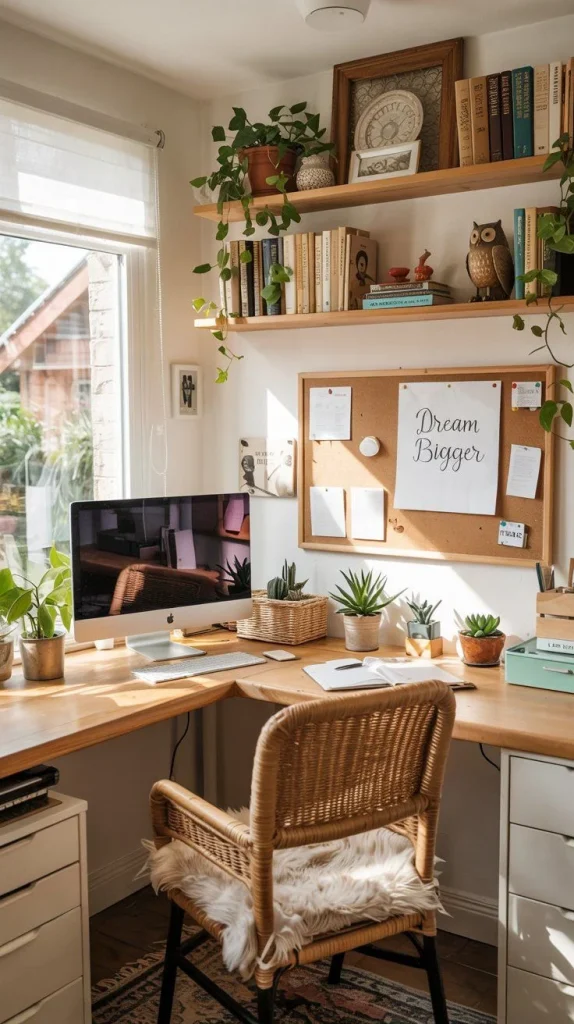
Working from a kitchen table or a couch might feel fine for a day or two, but over weeks and months, an unsuitable setup takes a real toll on both comfort and focus. Thoughtful home office ideas address this directly, treating the workspace as a dedicated zone rather than an afterthought squeezed into whatever surface happens to be free.
There’s also a mental separation benefit. A defined workspace, even a small one, helps create a boundary between work and the rest of home life, something that’s become increasingly important as remote and hybrid work have become permanent fixtures rather than temporary arrangements. Good home office ideas make that boundary physical, not just conceptual.
Finally, a well-planned home office tends to actually get used consistently, rather than abandoned in favor of the couch after the first uncomfortable week. Comfort and function, not just aesthetics, are what keep this concept working in practice rather than just in theory.
Finding Space for a Home Office Where None Exists

Not every home has a spare room to convert, and some of the most creative home office ideas come from finding workable space in unexpected places.
Convert an Underused Closet
A reasonably deep closet can become a compact home office with a small desk surface, a shelf for storage, and a task light, all tucked behind doors that close when the workday ends. This “cloffice” approach has become one of the more popular home office ideas for anyone without an extra room, since it keeps the workspace visually separate from the rest of the home.
Use a Room Divider in a Shared Space
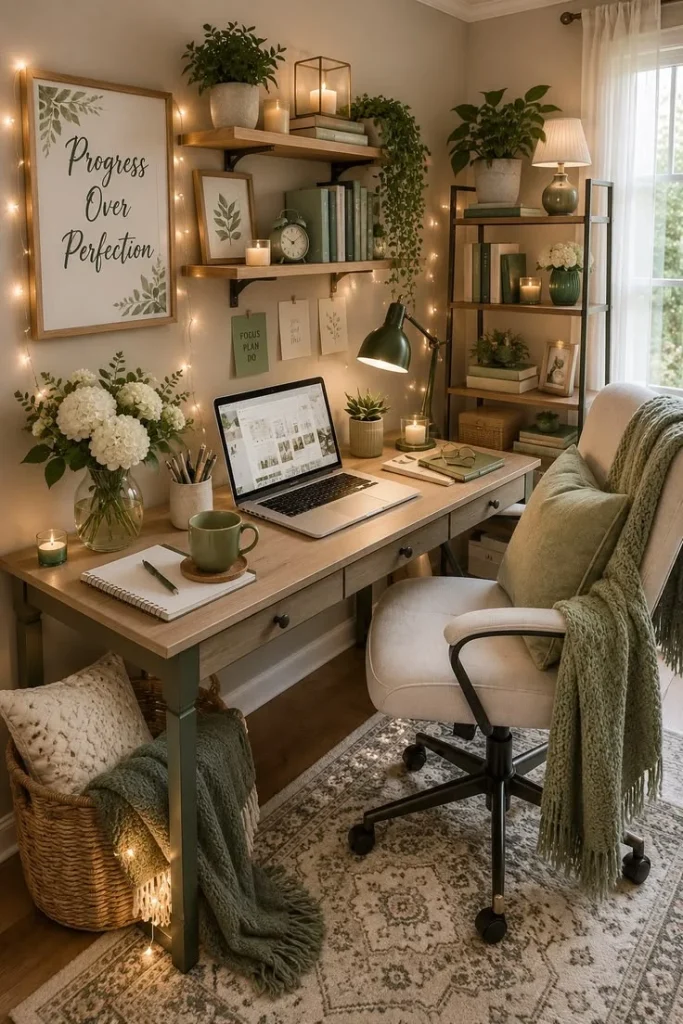
For those working from a living room or bedroom corner, a bookshelf, curtain, or folding screen can visually and physically separate a workspace from the rest of the room. This is one of the most effective home office ideas for open floor plans, since it creates a sense of boundary without requiring an actual wall.
Build a Corner Setup
Many rooms have an underused corner that can accommodate a small desk and chair without disrupting the room’s main function. Corner setups are among the most space-efficient strategies, since they take advantage of square footage that would otherwise go unused entirely.
Consider a Wall-Mounted Desk
A fold-down or wall-mounted desk can provide a full work surface during the day and disappear entirely when not in use. This is one of the more clever home office ideas for very small apartments or multi-purpose rooms, where floor space needs to serve more than one function.
Layout Principles That Make a Home Office Work
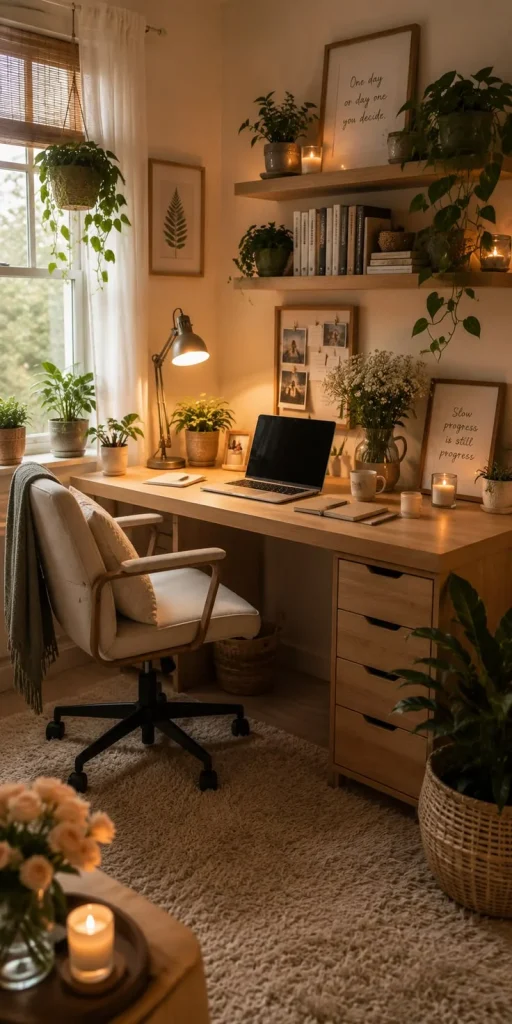
Once a location is chosen, layout has an outsized impact on how functional the space actually feels day to day.
Position the Desk Near Natural Light
Placing a desk perpendicular to, rather than directly facing, a window reduces glare on screens while still taking advantage of natural daylight. This small adjustment is one of the most overlooked home office ideas, since lighting placement affects both comfort and video call quality throughout the day.
Keep Frequently Used Items Within Reach
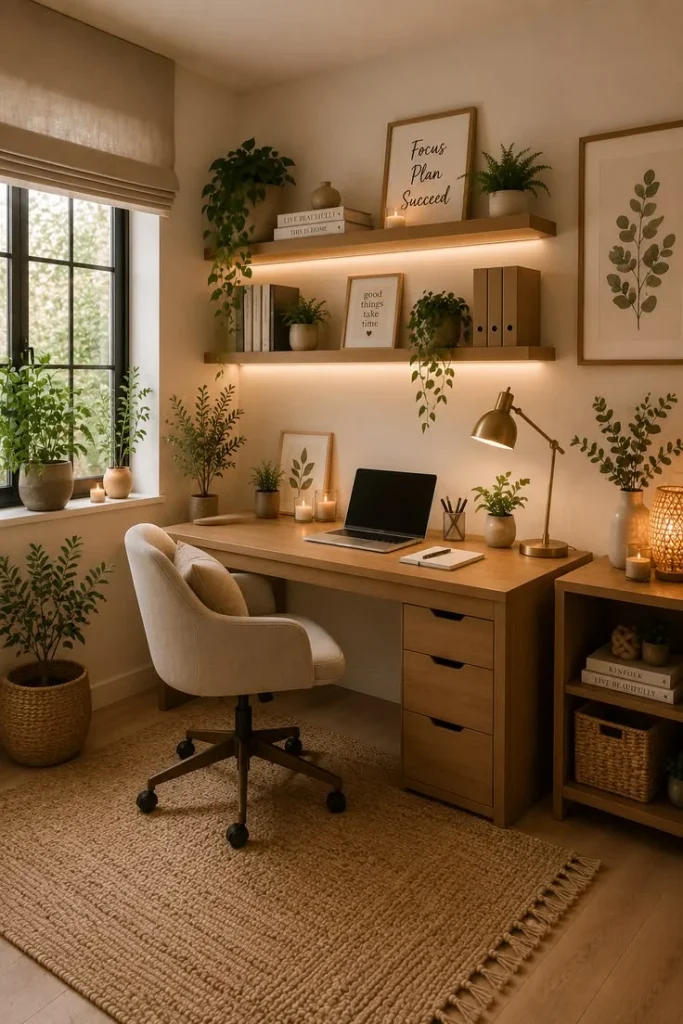
Arranging supplies, chargers, and reference materials within arm’s reach of the desk reduces the small daily frictions that add up over a full workweek. This principle applies to nearly every version of home office ideas, regardless of the space’s overall size.
Leave Room to Move
Even in a small setup, leaving enough clearance to push back a chair or stand and stretch matters more than it might seem. Cramped setups that ignore basic clearance tend to feel uncomfortable quickly, even if the desk and storage themselves are well chosen.
Budget-Friendly Ideas That Don’t Sacrifice Function

A functional, good-looking home office doesn’t require an expensive overhaul, and some of the best home office ideas cost very little to execute.
Repurpose Furniture You Already Own
A console table, a small dining table, or even a nightstand can function as a desk in a pinch, especially in a small apartment where buying a dedicated piece isn’t practical. This kind of repurposing is one of the most budget-friendly home office ideas available, since it requires no new purchase at all. Our apartment decorating ideas guide covers more strategies for making existing furniture work harder.
Shop Secondhand for Bigger Pieces
Desks, chairs, and filing cabinets hold up well secondhand, and marketplace or thrift finds can furnish an entire home office setup for a fraction of retail cost. Among budget-conscious home office ideas, secondhand shopping consistently delivers the best value, particularly for larger pieces like desks and storage units that would otherwise be expensive new.
Prioritize the Chair Over Everything Else
If budget is limited, spending slightly more on a comfortable, supportive chair while saving elsewhere tends to pay off more than any other single choice. Ergonomics matter more for daily comfort than nearly any other item on a list of this concept, making this one investment worth prioritizing even on a tight budget.
Use Paint and Accessories to Elevate a Basic Setup
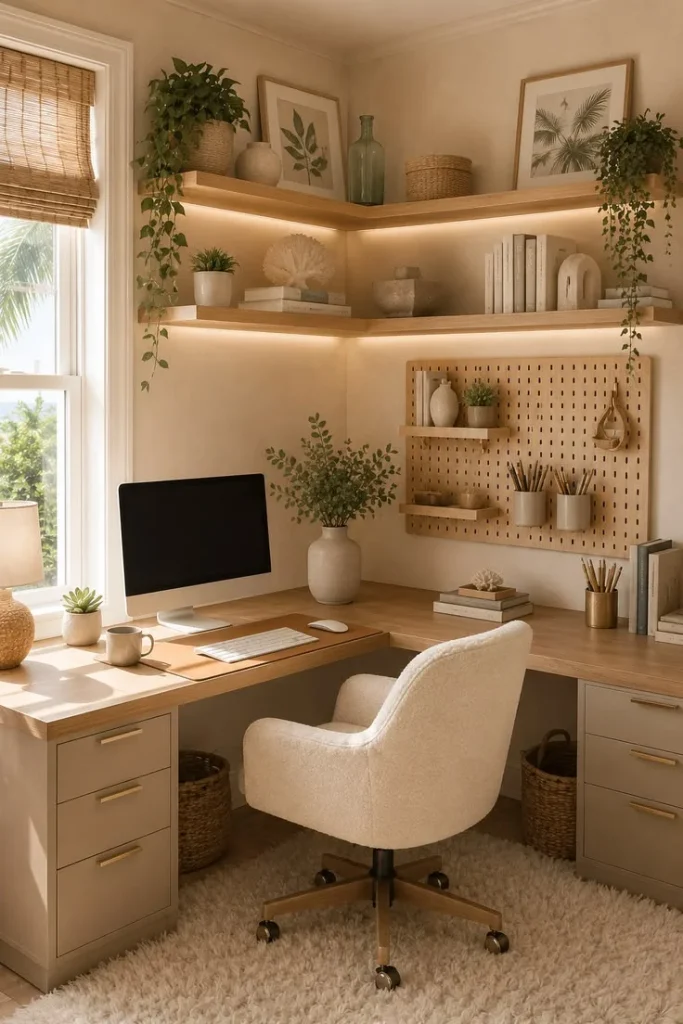
A fresh coat of paint on an existing desk, a new set of drawer pulls, or a simple desk organizer can make a basic setup feel considerably more polished without a large expense. These small, affordable touches are some of the most cost-effective home office ideas, often making a bigger visual difference than their price would suggest.
Skip Trendy Purchases in Favor of Timeless Basics
Trend-driven accessories can date quickly, while simple, well-made basics tend to remain useful and visually relevant for years. Choosing timeless pieces over trendy ones is one of the smarter long-term home office ideas for anyone trying to stretch a limited budget across a setup meant to last.
Storage Solutions for a Clutter-Free Workspace
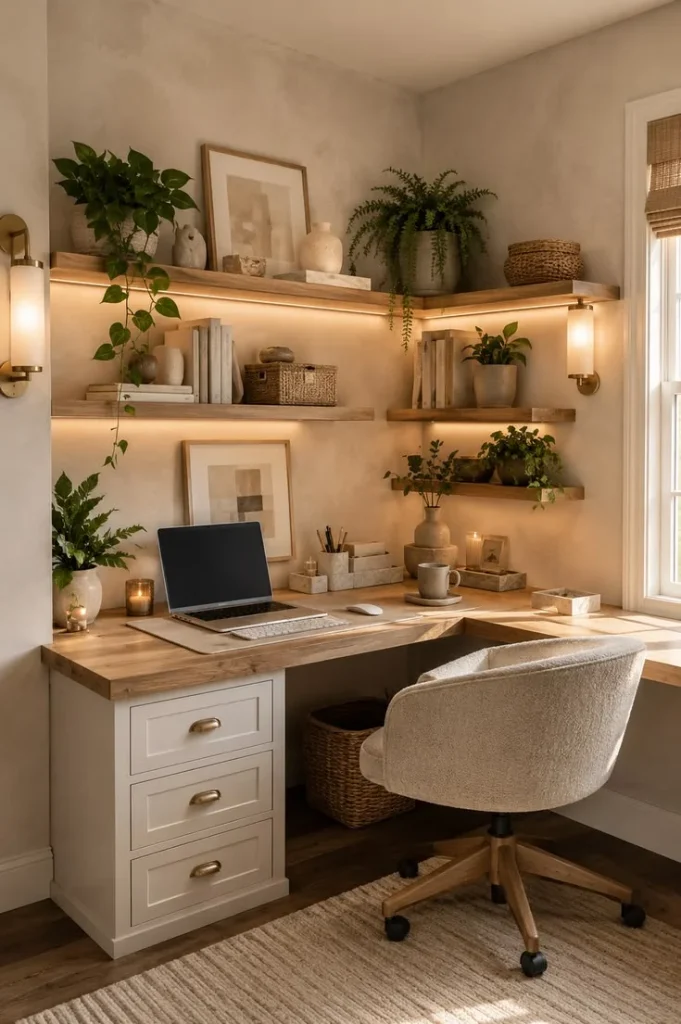
Clutter is one of the fastest ways to undermine an otherwise well-planned home office, and smart storage is central to keeping a workspace functional over time.
Use Vertical Wall Space
Wall-mounted shelves, pegboards, and hanging organizers keep supplies accessible without taking up desk or floor space. This is one of the most consistently recommended home office ideas for small setups, since vertical storage makes use of space that would otherwise sit empty.
Choose a Desk With Built-In Storage
A desk with drawers eliminates the need for a separate filing cabinet or storage unit, which matters significantly in tighter spaces. Among space-saving approaches, a storage-integrated desk often solves two problems, work surface and organization, with a single purchase.
Create a Dedicated Cable Management System
Tangled cords are one of the most common sources of visual clutter in a home office, and a simple cable tray, clips, or a box to contain a power strip can clean up the look of a desk almost instantly. This small detail is an easy addition to any list of home office ideas, since it costs little but noticeably improves how finished a workspace looks.
Lighting That Supports Focus and Video Calls
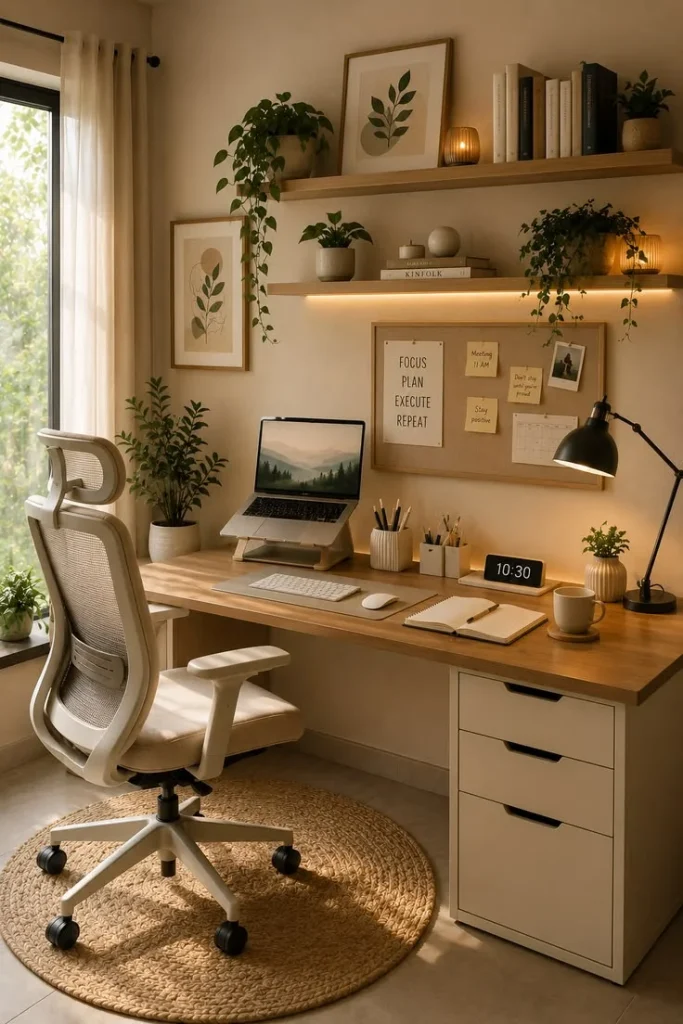
Lighting affects both productivity and how a person appears on video calls, making it one of the more functionally important home office ideas to get right.
Natural light should be the starting point wherever possible, but most home offices also need supplemental lighting for cloudy days or evening work. A dedicated desk lamp with adjustable brightness reduces eye strain during long work sessions, while a secondary light source positioned to reduce shadows on video calls makes a noticeable difference in how professional a home office setup appears on screen.
Warm-toned bulbs tend to feel more comfortable for long stretches of work than harsh, cool-toned lighting. This small adjustment is one of the easiest home office ideas to implement immediately, since it usually just requires swapping a bulb rather than purchasing new fixtures.
Personalizing a Home Office Without Losing Function
A home office that feels sterile is just as hard to spend time in as one that’s uncomfortable, which is why personal touches matter alongside practical considerations.
Artwork, plants, and a few personal objects can make a workspace feel genuinely welcoming without compromising its function. Our room color schemes ideas guide has more direction on choosing a palette that feels calm and focused rather than distracting. A single plant on the desk or a shelf introduces life and color at minimal cost, making it one of the most popular ways to add warmth to an otherwise utilitarian space.
Keeping personal touches to a curated few, rather than crowding the desk with decorative objects, tends to strike the right balance between personality and function. The goal of good home office ideas isn’t a bare, sterile setup, but one where personal style doesn’t get in the way of actually getting work done.
Setting Up in Shared and Multi-Purpose Spaces
Many home offices have to double as something else, a guest room, a dining area, or a corner of the living room, which requires a slightly different approach than a fully dedicated room.
Choosing furniture that can be tucked away or closed off, like a desk with a fold-down surface or a cabinet that conceals a monitor, helps a shared space transition cleanly between its different functions. Rolling carts and mobile storage units allow supplies to be wheeled out of sight when the space needs to serve another purpose. Our small living room layout guide offers additional layout strategies that apply well to multi-purpose rooms doubling as a workspace.
Common Mistakes to Avoid
Even well-intentioned home office ideas can fall short with a few common missteps. Prioritizing appearance over ergonomics is one of the most frequent issues; a beautiful desk and chair that cause discomfort after a few hours defeat the purpose of the setup entirely.
Underestimating storage needs is another common mistake, leading to a workspace that looks organized on day one but becomes cluttered within weeks. Planning storage for realistic, ongoing use rather than a single tidy photo prevents this problem from creeping back in.
Finally, placing a desk in a spot with poor lighting or distracting sightlines, like facing a busy hallway or a television, can quietly undermine focus even when every other element of the space is well chosen. Testing a location for a full workday before committing to it helps catch these issues early.
Tech Setup and Ergonomics Worth Getting Right
Beyond furniture and layout, a handful of technical and ergonomic choices make a measurable difference in how sustainable a workspace feels over the long term. Monitor height matters more than people expect; the top of the screen should sit roughly at eye level to avoid the neck strain that comes from constantly looking down at a laptop propped on a desk. A simple stand or even a stack of sturdy books can achieve this without any real expense.
Keyboard and mouse placement should keep wrists in a neutral position rather than angled up or down, which is where a separate keyboard paired with a laptop stand often outperforms typing directly on a laptop for extended periods. These small ergonomic corrections are some of the most overlooked home office ideas, since they rarely show up in inspiration photos but make a genuine difference in daily comfort.
Cable organization deserves attention here too, not just for appearance but for function. A tangled mess of cords under a desk makes it harder to adjust or clean the space, while a simple system of clips or a cable tray keeps everything accessible and tidy at the same time.
Adapting a Home Office Across the Workday
A workspace that feels ideal for focused morning work might not suit an afternoon full of video calls, which is why some of the more flexible setups account for how a single space needs to shift throughout the day. Adjustable lighting, for instance, allows brightness to shift from energizing in the morning to softer and less harsh by late afternoon.
A small rug or floor cushion nearby can support a brief change of position for reading or phone calls, breaking up long stretches of sitting without requiring a second dedicated space. Even something as simple as a standing option, whether a full standing desk or a temporary riser placed on an existing surface, gives a home office more flexibility across a demanding day.
For anyone whose work fluctuates between deep focus tasks and frequent meetings, keeping a tidy, distraction-free zone within camera view matters just as much as the rest of the setup. A simple backdrop, whether a plain wall, a bookshelf, or a piece of art, rounds out the practical side of home office ideas built for video-heavy workdays.
Frequently Asked Questions
What are the best home office ideas for small spaces?
Wall-mounted desks, closet conversions, and room dividers are among the most effective home office ideas for small spaces, since all three create a functional workspace without requiring a dedicated room.
How can I set up a home office on a tight budget?
Repurposing existing furniture, shopping secondhand for larger pieces, and prioritizing a comfortable chair over decorative extras are some of the most effective budget-friendly home office ideas available.
What’s the most important piece of home office furniture?
The chair is generally considered the most important investment among these setups, since ergonomic support has a bigger daily impact on comfort and focus than any other single item.
How do I make a shared space work as a home office?
Furniture that closes off or tucks away, like a fold-down desk or a rolling storage cart, allows shared home office ideas to transition cleanly between work and the room’s other functions.
Does this setup need natural light?
Natural light is ideal but not required. Positioning a desk to avoid glare and adding a quality desk lamp can support focus and video call quality even in a space without much natural daylight.
Conclusion
The best home office ideas balance function, comfort, and personal style without requiring a dedicated room or a large budget. From closet conversions and corner setups to secondhand furniture and thoughtful lighting, there are practical ways to build a workspace that actually supports a full workday, not just a single photogenic moment.
Start with layout and comfort, prioritize the chair if budget is limited, and add personal touches gradually once the essentials are in place. However you approach it, thoughtful home office ideas prove that a productive workspace is about function and planning, not square footage or spending.


