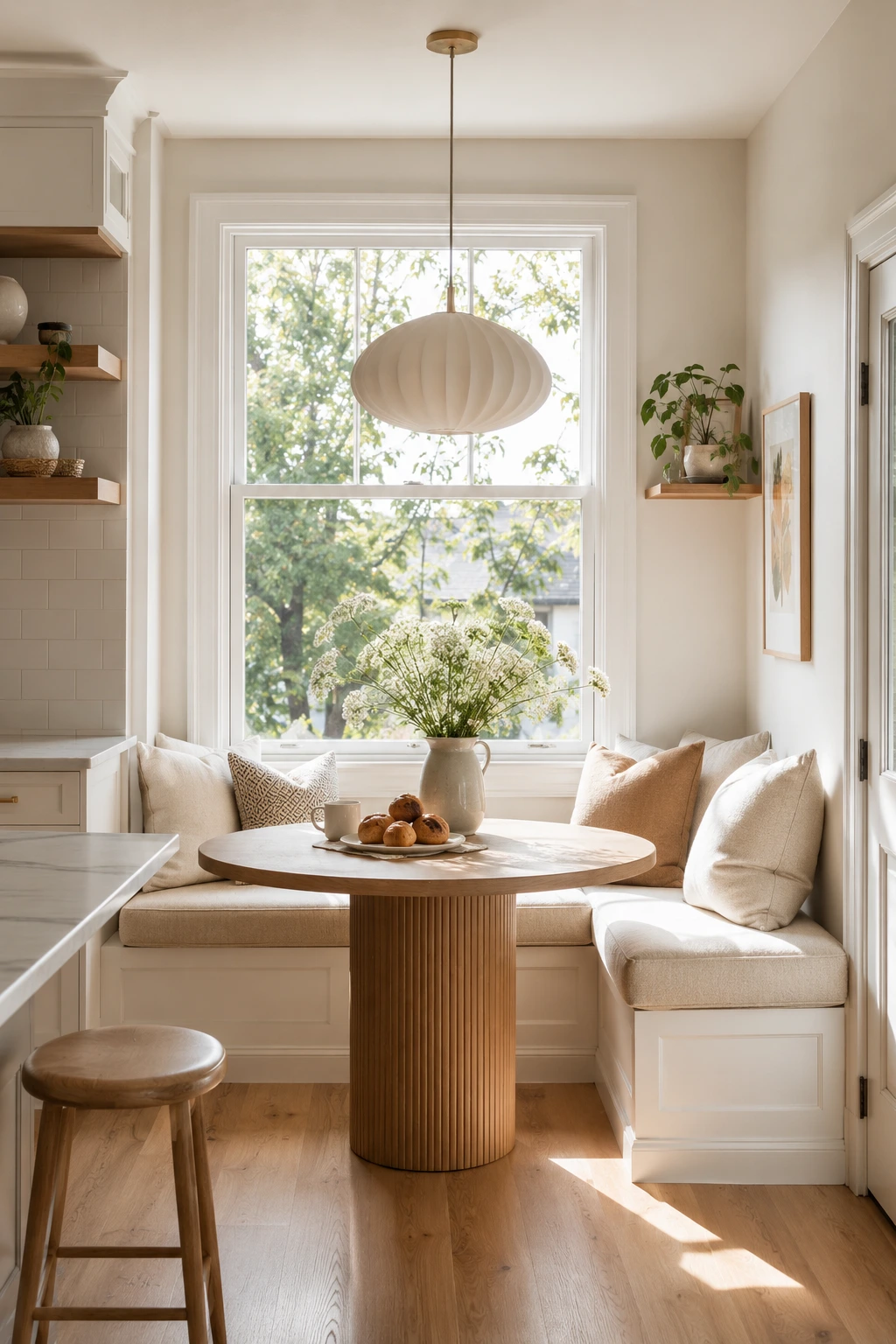
Small Breakfast Nook Ideas: 17 Designs That Make Tiny Corners Feel Like a Destination
Small Breakfast Nook Ideas are all about making the most of unused space. You’ve got a corner that’s doing nothing. Maybe it’s where your chair migrates to, or where you stack things you’ll “deal with later.” It has potential serious potential and a breakfast nook is exactly what it’s been waiting for.
The breakfast nook isn’t a new idea. It’s been around since 1920s American bungalows, when built-in bench seating replaced formal dining rooms in smaller homes. But in 2026, it’s having a full-on moment. Open-plan kitchens are being reimagined into zones, apartment living is pushing people to make every square foot intentional, and honestly people want a reason to sit down in the morning without staring at a laptop on the couch.
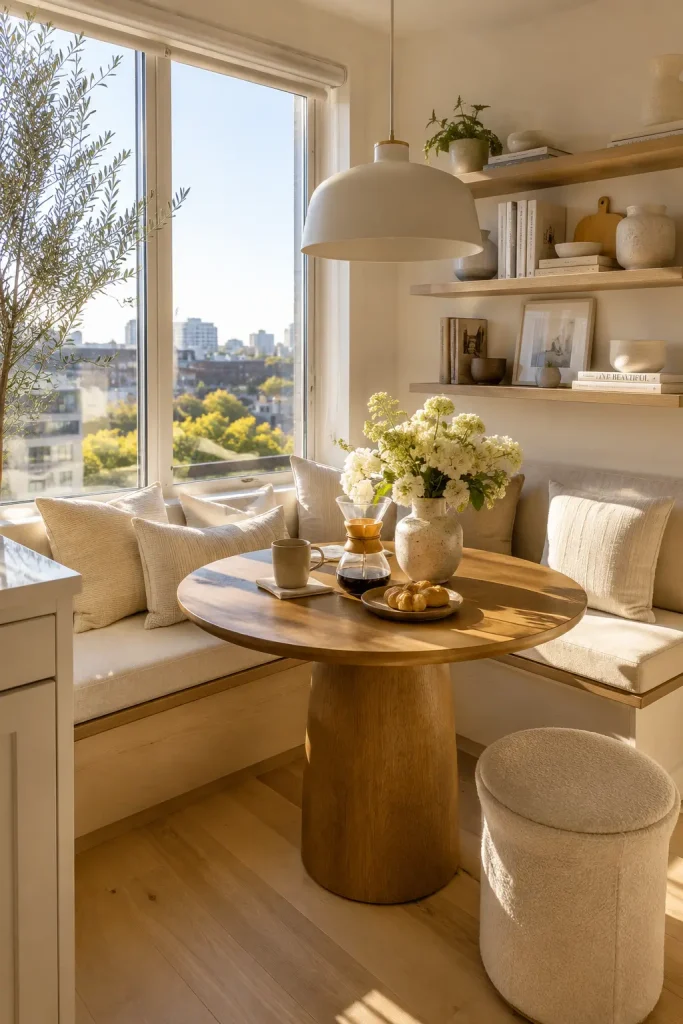
The challenge with small spaces isn’t creativity. It’s knowing which ideas actually work when you’re working with 40–80 square feet instead of 200. That’s what this guide covers: layouts that fit, furniture that earns its keep, and design details that make a tiny nook feel like the best seat in the house.
Here’s what we’ll get into:
- The best layouts for awkward corners, bay windows, and kitchen peninsulas
- Built-in vs. freestanding furniture — and when each one wins
- Budget tiers from under $300 to full custom builds
- Lighting, color, and material choices that make small feel big
- Common mistakes that make nooks feel cramped (and how to avoid them)
Why Small Breakfast Nooks Work (When Done Right)
There’s a spatial logic to the breakfast nook that makes it uniquely suited to small homes. A standard four-top dining table requires roughly 10×10 feet of clear floor space once you account for chair pull-out. A well-designed banquette nook with a pedestal table? You can do it in as little as 5×5 feet. That’s why so many homeowners turn to Small Breakfast Nook Ideas when looking for ways to maximize function without sacrificing comfort or style.
The reason: bench seating slides in without needing clearance behind it. Diners scoot in from the side. That single design principle unlocks spaces that a traditional dining setup simply can’t touch. It’s a smart solution that works especially well alongside a Black Kitchen Cabinet, helping create a stylish, functional, and space-efficient kitchen.
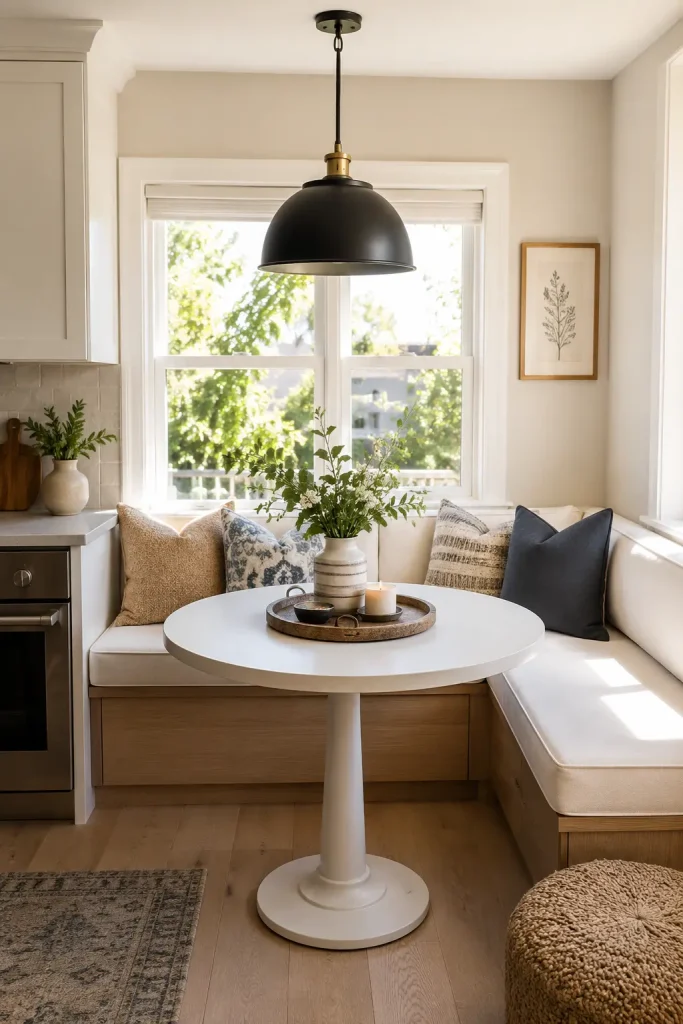
The other secret is the psychological effect. Enclosed, defined spaces — especially ones with a view or a built-in sense of shelter — feel cozy rather than cramped. Designers call this the “prospect and refuge” principle. A nook offers both: you can see out, and you feel contained. That’s why people love window seats, corner booths, and yes, breakfast nooks.
The Best Layouts for Small Breakfast Nooks
1. The Corner L-Shape (Most Popular, Best Space Efficiency)
Works for: Kitchens with a dead corner, open-plan spaces, apartments.
Minimum footprint: 5 feet × 5 feet
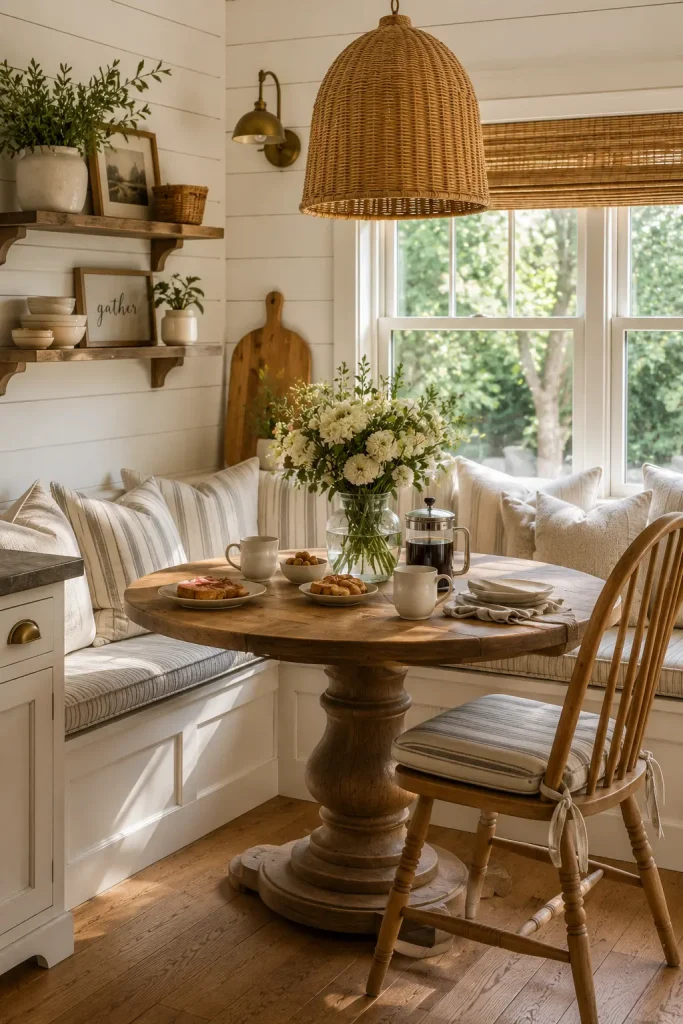
Two bench seats meet at a 90-degree angle, with a round or square table in the crook. This is the most common nook configuration for good reason — it seats 4 comfortably in a fraction of the space a standard table needs, and the corner wall does structural work by supporting the bench backs.
Pro tip: A round table (36–42 inches diameter) works better here than a rectangular one. It eliminates sharp corners in a tight space and makes it easier to slide in and out.
2. The Bay Window Nook (Most Dramatic, Best Natural Light)
Works for: Homes with a bay or bump-out window, older houses.
Minimum footprint: Bay projection of 18+ inches
This is the classic. A cushioned bench built across the bay window base, flanked by two shorter benches on the angled sides, with a narrow table centered in front. Every morning, you get natural light from three sides.
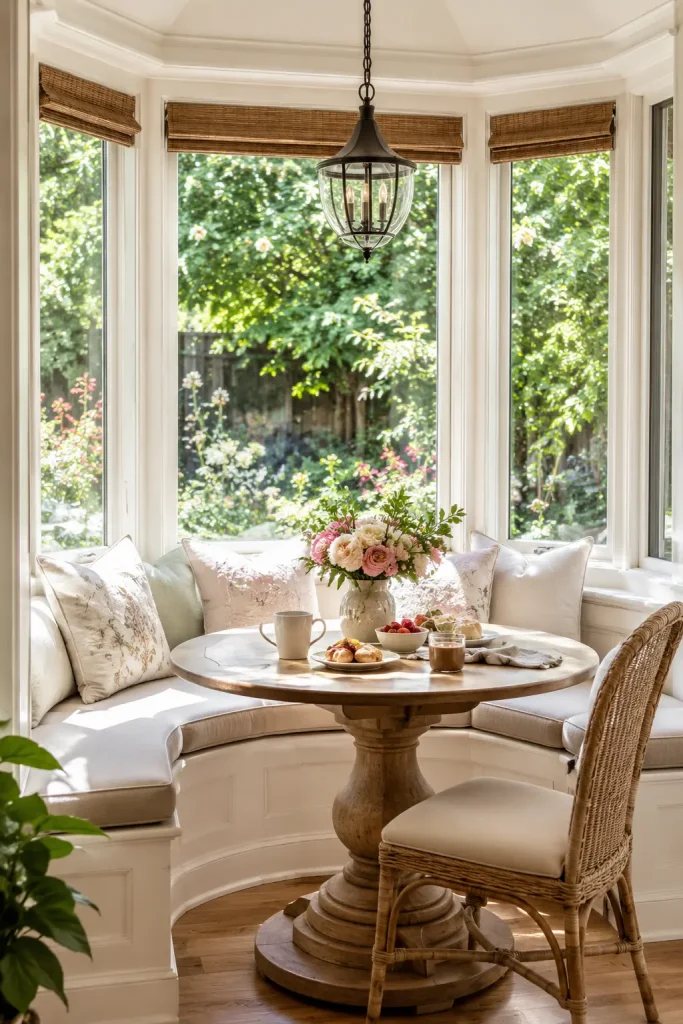
If your bay window doesn’t have a built-in seat, a painted MDF platform with plywood top and a custom cushion can replicate the look for $400–$800 in materials.
3. The Single-Wall Banquette (Best for Narrow Kitchens)
Works for: Galley kitchens, narrow dining areas, apartments with one open wall.
Minimum footprint: 7 feet long × 4 feet deep
One long bench against a wall, with two or three chairs across a narrow table. This works especially well when one wall is already anchored by a window or a row of lower cabinets. The look becomes even more inviting when paired with Oak Kitchen Ideas, as the warm wood tones help create a cozy and timeless dining space.
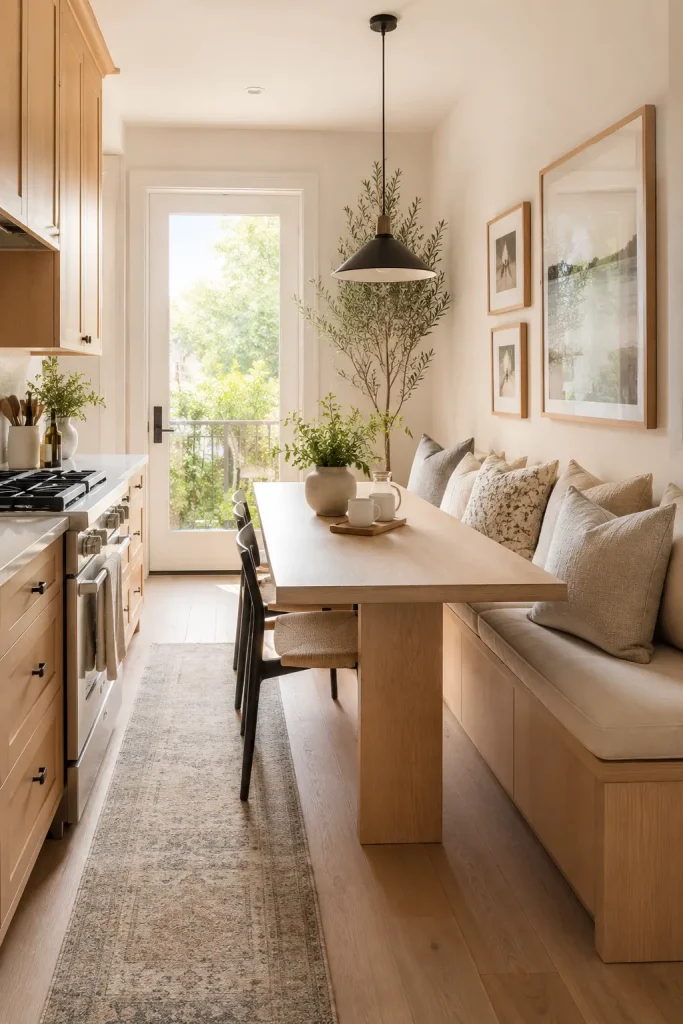
Clearance rule: Leave a minimum of 36 inches between the table edge and any opposite wall or island. 42–48 inches is comfortable; 36 inches is workable if traffic through that space is light.
4. The Freestanding Bistro Setup (Most Flexible, Easiest to Execute)
Works for: Renters, people who want reversible solutions, small studio apartments.
Minimum footprint: 4 feet × 4 feet
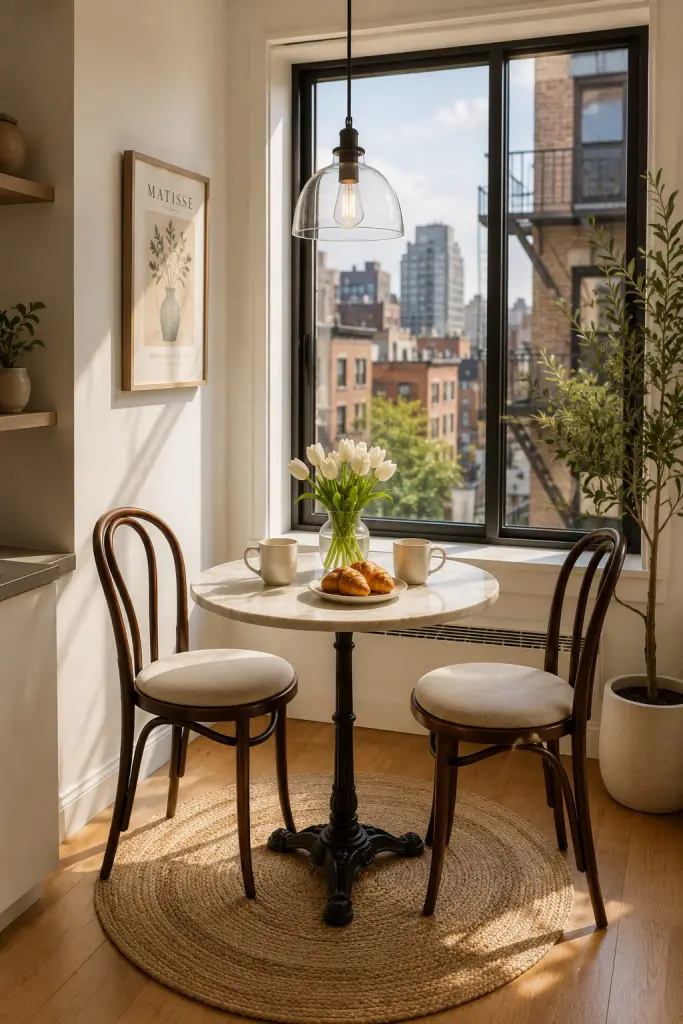
A small round or square café table (28–32 inches) with two chairs or a small bench on one side. Zero built-ins required. This is the “starter nook” — and with the right furniture and lighting, it doesn’t look like a compromise.
5. The Kitchen Peninsula Nook (Best for Existing Layouts)
Works for: Homes with an existing peninsula or island with overhang.
Minimum footprint: Whatever the peninsula already provides
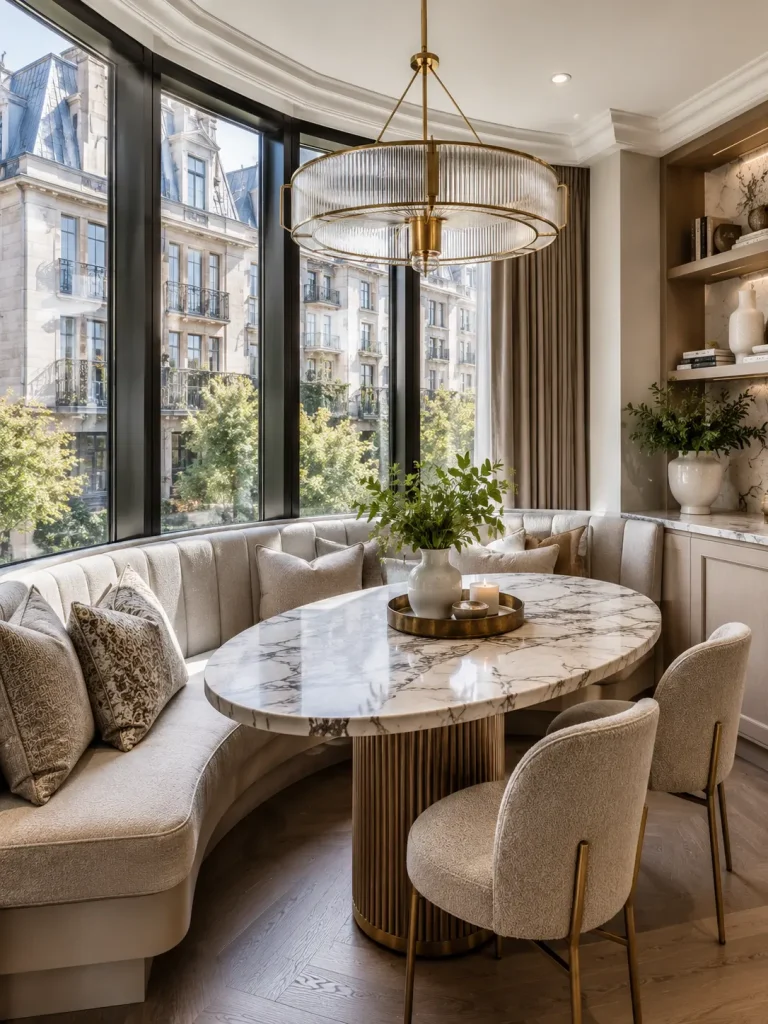
If your peninsula has a breakfast bar overhang (minimum 12 inches), adding two or three counter-height stools on one side creates an instant nook — no construction needed. Add a pendant light and a small plant and it reads as an intentional design choice.
Built-In vs. Freestanding: Which One Should You Choose?
| Factor | Built-In Banquette | Freestanding Furniture |
|---|---|---|
| Space efficiency | ✅ Maximum — benches tuck under table | ⚠️ Needs chair pull-out clearance |
| Storage | ✅ Can include under-seat drawers | ❌ Usually none |
| Cost | ⚠️ $800–$5,000+ (DIY to custom) | ✅ $150–$1,500 |
| Flexibility | ❌ Permanent, hard to change | ✅ Move or sell any time |
| Visual impact | ✅ High — looks custom and intentional | ⚠️ Depends on furniture quality |
| Best for | Homeowners, longer-term renters | Renters, apartments, smaller budget |
Furniture & Sizing: What Actually Fits
Getting the measurements wrong is the #1 reason nooks feel uncomfortable. Here are the numbers that matter:
- Bench seat height: 17–19 inches from floor (matches standard chair height)
- Bench seat depth: 17–20 inches (deeper feels luxurious; 17 is the minimum for comfort)
- Table height: 28–30 inches (standard dining height)
- Knee clearance under table: Minimum 12 inches from seat surface to tabletop underside
- Table-to-wall clearance: 36 inches minimum to slide in; 42–48 inches preferred
- Cushion thickness: 3–4 inches of foam minimum (anything thinner feels like a church pew)
Best small-space table shapes:
- Round: Most forgiving in tight corners; no sharp edges; seats 2–4
- Square (28–36 inch): Clean and graphic; great for two people
- Oval/rectangular with pedestal base: Good for L-shapes; pedestal eliminates leg interference
Design Styles That Work in Small Breakfast Nooks
Farmhouse/Cottagecore
White shiplap or beadboard paneling on the nook walls, bench cushions in ticking stripe or linen, a simple pedestal table in white or natural wood, and a pendant light with a woven shade. This is the most searched style and for good reason. It’s warm, timeless, and forgiving of imperfect execution.
Scandinavian Minimal
Clean-lined bench in natural birch or light oak, a round table in white or light concrete finish, no cushion or a single thin pad in neutral wool. Pendant lighting in matte black or warm brass. No clutter on the walls. This style rewards good proportions above everything else.
Maximalist/Grandmillennial
Upholstered bench in a bold print (florals, jewel-tone velvets), gallery wall above the bench, mismatched vintage chairs across the table, a statement pendant or chandelier, and patterned tile on the floor or as a backsplash behind the nook. Small spaces can handle maximalism if every element is intentional.
Modern Industrial
Dark-stained wood or painted black bench, hairpin leg table in walnut or black steel, exposed brick or dark tile behind the nook, Edison bulb pendants. The contrast of dark tones with natural light from a nearby window is particularly effective.
Lighting: The Detail Most People Get Wrong
The overhead recessed light that covers your kitchen is almost never the right light for a breakfast nook. It’s too flat, too bright, and too cold for an intimate seating area.
The right move is a pendant light hung directly above the table, positioned 28–34 inches above the tabletop. This creates a pool of warm, focused light that defines the nook as its own zone separate from the kitchen even if it’s in the same room.
What to look for in a nook pendant:
- Scale: For a small nook, a pendant 10–16 inches in diameter is usually right. Bigger reads as a statement; smaller gets lost.
- Warmth: Bulbs at 2700K–3000K (warm white). Never 4000K+ (cool/daylight) in a cozy setting.
- Adjustable cord or chain: You want to dial in the hang height, not guess.
Layered lighting bonus: Add a small table lamp or plug-in sconce on one wall of the nook if outlets allow. The second light source at a lower level makes the space feel dramatically more designed.
Storage in Small Nooks (You Have More Than You Think)
Built-in benches with hinged seats or drawers are the most underused storage opportunity in a home. A standard L-shaped built-in nook can contain 10–20 cubic feet of hidden storage — enough for tablecloths, seasonal items, kids’ school supplies, or pantry overflow.
Even without a full built-in, consider:
- IKEA KALLAX cubes as the structural base of a DIY bench (top with a plywood lid and cushion)
- Shallow floating shelves above the bench for cookbooks, plants, and everyday items
- Hooks on the side panel of the bench for bags, aprons, or coats
- A table with a lower shelf (many bistro tables have one) for baskets and magazines
Myth vs. Fact: Small Breakfast Nook Edition
| Myth | Fact |
|---|---|
| “You need a bay window for a nook.” | A simple corner works just as well — bay windows add light but aren’t structural to the nook concept. |
| “Built-ins are always more expensive.” | A DIY IKEA-hack bench can cost under $300; a custom-built nook can hit $5,000+. The range is wide. |
| “Dark colors make small spaces feel smaller.” | Used intentionally on a nook’s back wall, dark color creates depth and makes the nook feel like a destination, not just a tight corner. |
| “You need a matching set.” | Mixing a bench on one side with chairs on the other (the “mix-and-match” method) is both practical and on-trend. |
| “Cushions are optional.” | For anything longer than 15 minutes at the table, they’re not. Bare wood benches are uncomfortable and people avoid sitting in them. |
Budget Breakdown by Tier
Tier 1: Under $500 — The Apartment-Friendly Setup
- Freestanding bistro table (28–32 inch round): $80–$150 (Amazon, IKEA, Target)
- Two café chairs or a small bench + one chair: $100–$250
- Pendant light (plug-in): $40–$80
- Cushion (if bench): $30–$60
- Total: $250–$540
Tier 2: $500–$2,000 — The Committed Renter or Budget Homeowner
- IKEA KALLAX-based DIY bench (materials): $200–$400
- Cushion and fabric: $80–$200
- Pedestal table: $150–$400
- Wainscoting or shiplap on one wall (DIY): $100–$300
- Pendant light (hardwired or plug-in): $80–$200
- Total: $610–$1,500
Tier 3: $2,000–$6,000+ — The Custom Built-In
- Carpenter-built L-shaped bench with storage: $1,500–$3,500
- Custom or semi-custom cushion: $300–$800
- Table (solid wood or custom): $400–$1,500
- Trim, paint, wainscoting, tile: $500–$1,500
- Lighting: $150–$500
- Total: $2,850–$7,800
EEAT Section: What We’ve Seen Work (And Fail)
After reviewing dozens of nook renovations and working through the planning phase with homeowners across different space types, one mistake comes up more than any other: people underestimate the bench seat depth.
A 14-inch-deep bench is a common shortcut — it’s what fits when you’re trying to save every inch. But at 14 inches, the average adult sits with their lower back unsupported, knees at an uncomfortable angle, and after 20 minutes they’re done. The nook becomes decorative. It looks beautiful in photos and nobody uses it.
The minimum for genuine daily comfort is 17 inches of seat depth, with 20 inches being the sweet spot. If you have to choose between a shallower bench and a narrower table to hit that number, go with the narrower table every time. A 28-inch table with a 20-inch-deep bench will get used every day. A 36-inch table with a 14-inch bench is a very expensive photo prop.
The second most common mistake: choosing a pendant that’s too small. A 6-inch pendant over a 36-inch table looks like it got lost. Measure your table width, then go with a fixture that’s at least 1/3 of that diameter. For a 36-inch table, that’s a 12-inch minimum pendant.
FAQ: Small Breakfast Nook Ideas
Conclusion
The breakfast nook is one of the highest-return design moves in a small home. You’re not just adding seating you’re creating a place. Somewhere specific to sit, to eat, to read, or to enjoy a slow morning. In homes where every square foot needs to justify itself, that matters. The same idea applies to thoughtful Pink Color Room Decor Ideas, where intentional design choices help create a space that feels both beautiful and functional.
The core principle: bench seating over chairs, proper cushion depth, a pendant overhead, and a table sized to the space rather than to an arbitrary standard. Get those four things right and the style is almost secondary.
Design trends in 2026 are moving toward “slow living” spaces areas of the home deliberately set apart from screens and productivity. The breakfast nook fits that perfectly. Expect to see more upholstered banquettes in textured fabrics, more rounded forms (oval tables, arched paneling behind the bench), and more mixing of vintage and contemporary pieces.


